Crypto market crash, what the sell-off means for long-term holders
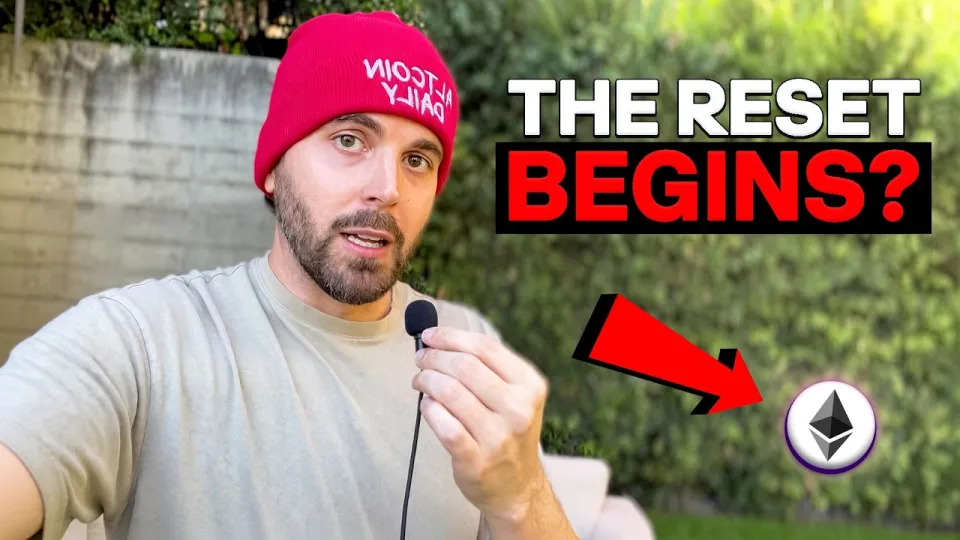
Video: Crypto Investors Are In Serious Trouble (market crash)
You can order the same kind of articles for your own video to boost it on YouTube and Google. Just message the Telegram bot @sat_sit_bot. The bot writes and publishes the articles itself (with your YouTube video embedded) on popular topical websites (no ads). Free trial — 50 articles.
· based on the channel Altcoin Daily
A crypto market crash is a sharp, sentiment-driven drawdown in digital asset prices, and the practical answer for long-term holders is to keep position sizing and time horizon fixed instead of reacting to headlines. In the latest Altcoin Daily breakdown, the framing is blunt: prices are falling, but the numbers behind the panic are less dramatic than the word "crash" suggests. Bitcoin was quoted at $80,707 as of October 24, 2026, a level that implies a five-year compound annual growth rate of just 5.78%. Merch for the channel is available through the Altcoin Daily shop.
What the numbers actually say about this crypto crash
A 5.78% five-year CAGR is the single most important figure in the current debate, because it reframes the narrative. Bitcoin's price history is usually told as a series of explosive cycles; measured over five years to that October 24 snapshot, the return compresses to something closer to a savings account than a speculative mania.
That has two consequences:
- Investors who entered near prior highs are underwater in real terms, which explains the anxiety in the comment sections.
- Investors who accumulated during drawdowns are still profitable, which explains why so many describe the drop as an opportunity.
The channel's core argument is that this is a sentiment event, not a structural break. Liquidity is thin, leverage is crowded on one side, and forced liquidations cascade — mechanics that produce violent wicks without changing the underlying supply schedule or adoption curve.
Why long-term holders treat a market crash as an accumulation window
A market crash rewards the investor who has cash ready and a written plan, not the one who checks prices daily. The most common response from experienced holders is mechanical: buy in tranches, average down, and avoid sizing positions so large that a 30% drawdown forces a sale.
Practical rules that show up again and again in this discussion:
- Define the buy zone in advance. Decide what price levels trigger purchases before the drop happens, so emotion is removed from the decision.
- Average in, don't all-in. Splitting capital into three to five tranches protects against a lower low.
- Keep dry powder. Viewers openly describe saving cash specifically for a big dip rather than shopping during flat markets.
- Check the thesis, not the chart. If the reason you bought has not changed, a lower price is a discount, not a warning.
One widely echoed sentiment is that a crash simply buys time — more weeks to accumulate at prices that may not return. The counterpoint is equally valid: an investor whose living situation is uncomfortable should fix that first. Cash spent on housing stability is not a missed trade.
Bitcoin versus Ethereum: the cycle divergence investors keep raising
Ethereum's failure to print a higher high every cycle while Bitcoin does is the structural question underneath the price panic. Bitcoin has historically set a new all-time high in each cycle; ETH has not matched that pattern with the same reliability, and holders want to know whether the relationship has permanently changed.
There is no clean answer, but the useful way to frame it is by asking what each asset is being priced on:
- Bitcoin is increasingly treated as a macro asset and a treasury reserve, which pulls it toward institutional flows.
- Ethereum is priced more on network usage, fee revenue and staking yield, which makes it more sensitive to on-chain activity than to cycle narrative.
- Solana sits in a third bucket, priced on throughput and consumer application growth; a $1,000 target by 2028 is a common bull case among viewers, not a forecast.
Corporate ETH treasuries add another variable. The question of what would have to happen for a large ETH-holding treasury company to start selling is a genuine overhang — a holder that size becomes a marginal seller in exactly the conditions where liquidity is thinnest.
Typical investor questions during a sell-off
Most questions during a drawdown fall into a few predictable categories, and each has a workable answer.
"Is this manipulation or a real crash?" Both descriptions can be true. Thin liquidity and leveraged positioning amplify moves; that amplification does not make the resulting price fake, it makes it fast.
"Should I stop checking prices?" Stepping back from daily price checks is a legitimate strategy for long-horizon holders. It only works if position sizes are small enough that you are not forced to look.
"Is it too late to buy?" If your horizon is measured in years, a few percent of entry price is noise. If your horizon is measured in weeks, no entry is safe.
"What about regulation?" Uncertainty about future rules cuts both ways, and markets price expectations rather than statutes. Fewer restrictions is a thesis, not a guarantee.
How to position for the next leg without predicting it
Positioning for a recovery starts with accepting that the bottom is only identifiable in hindsight. The workable approach is a written allocation: a core Bitcoin position, a defined altcoin sleeve, and a cash reserve sized to the drawdown you can tolerate.
Three concrete steps:
- Write down the maximum percentage of your portfolio you are willing to see fall 50% without selling.
- Set tranche prices for your core asset and stick to them regardless of news flow.
- Review the altcoin sleeve quarterly — narrative coins decay, and a crash is the cleanest time to cut the weakest positions.
Investors who survived previous cycles describe the same experience: the drawdown felt existential in the moment and obvious in retrospect. The variable that separated good outcomes from bad was not timing the bottom but avoiding forced selling.
Conclusion
A crypto market crash is a price event, not a verdict on the asset class, and the arithmetic here — Bitcoin at $80,707 with a 5.78% five-year CAGR — argues for patience rather than panic. The investors in the strongest position are those with pre-defined buy zones, dry powder and positions small enough to hold through a deeper drawdown. Altcoin Daily's breakdown makes the case that the current weakness is a sentiment and leverage story, and that the structural questions worth tracking are Ethereum's cycle divergence and the behavior of large corporate ETH holders. If you want to support the channel that produced this analysis, the Altcoin Daily merchandise store is the place to go.
Frequently asked questions
Is the crypto market actually crashing?
It depends on the measurement window. Bitcoin at $80,707 on October 24, 2026 implies a five-year compound annual growth rate of 5.78%, which is weak but not a collapse. Short-term holders see a crash; five-year holders see a flat stretch.
Should I buy during a crypto crash?
Buying in tranches during a drawdown is a standard approach, provided the purchase is part of a pre-written plan and the capital is not needed for near-term expenses. Averaging in over several entries reduces the risk of catching a falling knife with your entire position.
Why is Ethereum underperforming Bitcoin?
Ethereum has not reliably printed a higher high each cycle the way Bitcoin has, and its price is tied more closely to on-chain fee revenue and staking economics. Large corporate ETH treasuries add a potential supply overhang that Bitcoin does not have in the same form.
What price targets are investors watching for Solana?
A $1,000 SOL target by 2028 circulates widely among retail holders as a bull case tied to throughput and consumer app growth. Treat it as a scenario, not a forecast — no target survives contact with a liquidity shock unchanged.
Key takeaways
- Bitcoin traded at $80,707 as of October 24, 2026, according to a widely shared figure in the video's comment thread.
- At that price, Bitcoin's five-year compound annual growth rate is 5.78% — a return most equity index investors would not call a crash.
- The discussion frames the drop as normal market manipulation and a buying window rather than the end of the cycle.
- Ethereum has failed to make higher highs each cycle while Bitcoin has, a divergence raised repeatedly by viewers.
- A recurring viewer target: $1,000 per SOL by 2028.
Questions & answers
Is the crypto market actually crashing?
It depends on the measurement window. Bitcoin at $80,707 on October 24, 2026 implies a five-year compound annual growth rate of 5.78%, which is weak but not a collapse. Short-term holders see a crash; five-year holders see a flat stretch.
Should I buy during a crypto crash?
Buying in tranches during a drawdown is a standard approach, provided the purchase is part of a pre-written plan and the capital is not needed for near-term expenses. Averaging in over several entries reduces the risk of catching a falling knife with your entire position.
Why is Ethereum underperforming Bitcoin?
Ethereum has not reliably printed a higher high each cycle the way Bitcoin has, and its price is tied more closely to on-chain fee revenue and staking economics. Large corporate ETH treasuries add a potential supply overhang that Bitcoin does not have in the same form.
What price targets are investors watching for Solana?
A $1,000 SOL target by 2028 circulates widely among retail holders as a bull case tied to throughput and consumer app growth. Treat it as a scenario, not a forecast — no target survives contact with a liquidity shock unchanged.
Source: Crypto Investors Are In Serious Trouble (market crash) · Markdown version